
The LunchLady | CTW 1
GIANNI ADAMO
My dad called himself the “lunchlady.” To answer your question, yes, he was secure in his masculinity. He called himself the lunchlady proudly. He worked at my school - where he served as the one man band that put on hand made breakfast and lunch for a little over 100 people, five days a week. Sometimes he would go so far as to get to work at five o’clock in the morning to make handmade pizza (dough and all) for however many kids were buying lunch that day. Occasionally, we would even stop at FoodMaxx on the way to school to pick up whatever ingredients made sense for the daily menu. The minimum wage salary my dad made was of little importance to these efforts. He had the luxury of my mom being the main breadwinner. This relationship allowed him to do what he loved: make food.
Taco nights in the Adamo household were far from traditional. It all started with a pound of ground beef, defrosted in the pan at high heat. Then, a store-brand taco seasoning would be stirred in, along with sliced black olives, and–most notably–half a cup of ketchup. These ingredients were mixed until the ketchup was reduced. The resulting product is a smoky, tangy, slightly sweet beef. This mixture of authentic ingredients would then be spooned onto home-fried crispy flour tortillas, and served alongside a smattering of toppings, including cheddar cheese, sour cream, and Tabasco. If there is one dish that I associate with my childhood, it would be those beautiful white-people tacos.
One of the incredible things about food and drink is its ability to take us back in time. There are few experiences so visceral as tasting something “just like dad used to make.” For me, those white people tacos are what take me back to a simpler time. In a similar fashion, I believe that food has the power to demand reflection. Sometimes, that reflection can be a good way to reminisce. Other times, it can be like opening an old wound.
I never liked matcha. But whenever I see matcha, it takes me back to a summer course at California Polytechnic University San Luis Obispo in July of 2024. For those unaware, Cal Poly SLO is built on about 9,200 acres of mostly undeveloped hillside land. The campus itself includes dozens of hiking trails, agricultural fields, and panoramic views of San Luis Obispo. If it’s a clear enough day, you might even have the opportunity to see the Pacific Ocean from the top of Poly Canyon.
During this course I met a girl - Marie. Marie was from Ohio and had not seen California’s sprawling mountains before. As someone from the Central Valley of California, a region that has a remarkably similar environment and geography as many parts of the Central Coast, I took it upon myself to be something of a guide to my friend Marie. Over the two weeks of the course, I explained how California’s dry season impacts the agricultural practices of the region, how the marine layer creeps up the foothills of the coast, and how European grasses colonized the hillsides of California’s mediterranean hills.
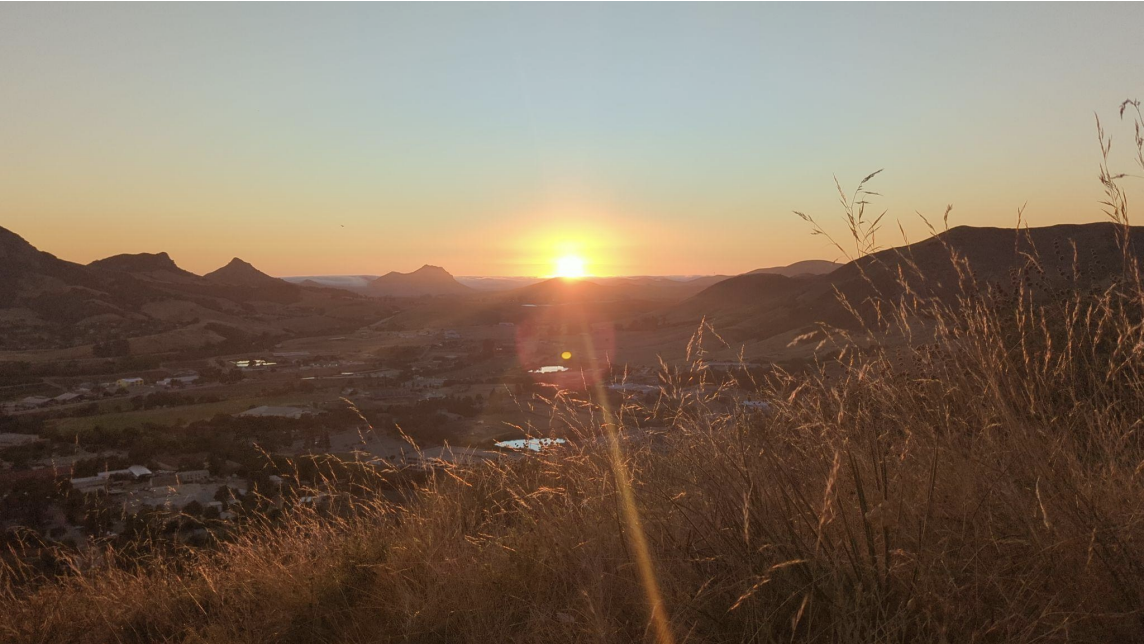
I vividly remember hiking that mountain with her on the fourth of July. It was golden hour, and it seemed like all of the soft brome had changed from its usual golden brown to a warm orange tone. A soft breeze was blowing across the mountain, which came with grass moving in rhythmic waves. From my phone, I played soft 70’s rock for our hiking adventure. Year of the Cat by Al Stewart rang out across the quiet hillside. I recall reaching the top, looking back at the campus, and seeing celebratory independence day fireworks rising high above the valley. In that moment, I realized I was where I wanted to be - surrounded by a remarkable group of people, learning and growing how I pleased.
It seemed fitting, then, that I was playing Year of the Cat on the hike. It’s a song about a fleeting romance. Two strangers meet in a curious new land, and waste no time exploring the winding streets of a city. Of course, “fleeting” implies that it doesn’t last forever. To quote Al himself, “The drumbeat strains of the night remain, in the rhythm of the new born day. You know sometime you’re bound to leave her. But for now, you’re gonna stay in the Year of the Cat.”
The moment I fell for Marie was not the hike, nor during any of my long-winded lectures on rain patterns (made by a boy far in over his head), it came from a far more heartfelt conversation. I remember getting off the bus in Morro Bay with the rest of the people from our program. As people finished exiting the bus, I pretty much shouted to the crowd: “Who wants to get coffee?” From the crowd shot up a hand - it was Marie’s. We started walking to a local shop, when she suddenly turned to me and asked: “So why do you like Star Trek more than Star Wars?” Of course, that question merited me paying for her matcha. Then, it turned into me paying for every matcha. It seemed only fair, given that the only person who had ever asked me a question like that was Adam Davis of Oakdale, California (he’s not my type).
There were innumerable moments like this - moments that made me feel like I had finally found someone who “got” me. The zenith of this experience came while at dinner in the second half of the course. I was doing some kind of bit. In that bit, I referred to Marie as a “woman.” After I finished the bit, she called to me from across the table - a table, mind you, surrounded by camp counselors and our friends - and asked that I come over. When I got over to her, she leaned in and whispered in my ear. She said (my right hand to God): “Make me a woman.”
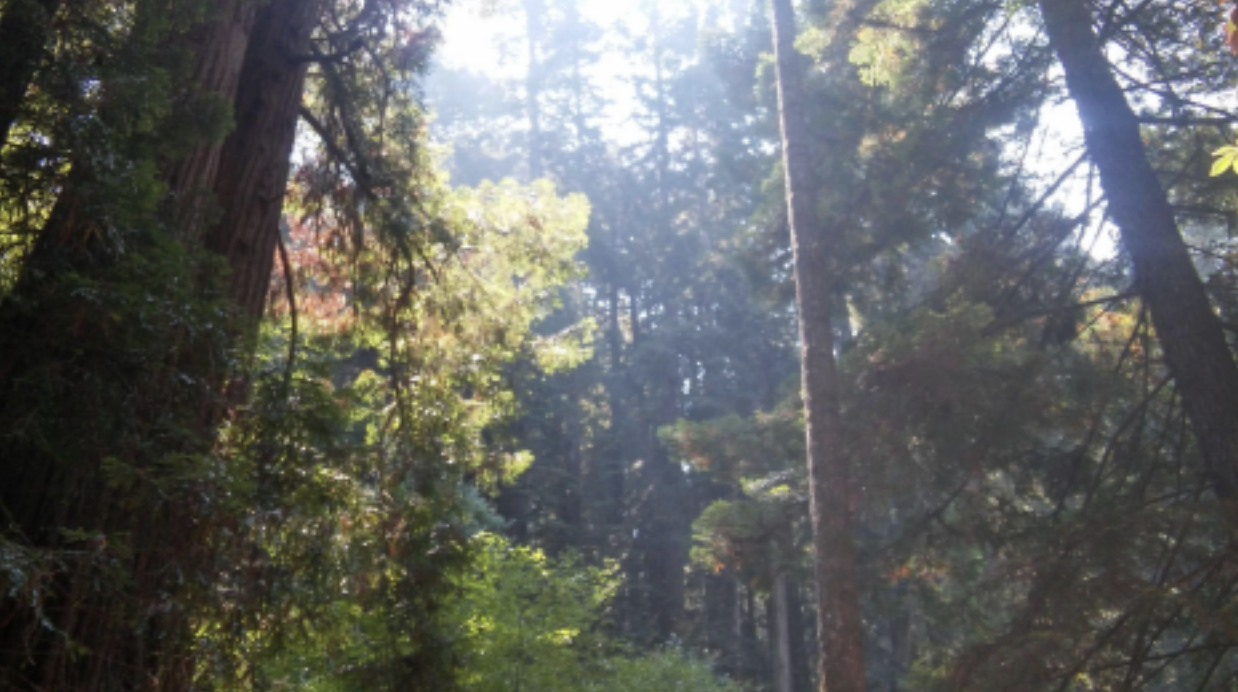
I still remember waking up on September 1st, 2017 to the lunchlady shouting from downstairs: “Get up! We’re doing something today!” When I asked what we’re doing, he simply said: “Something!” With the prerogative now clearly defined, my family and I piled into our 2006 Honda Pilot for the hour and a half jaunt to the Marin Headlands. We made a stop in North Beach in an attempt to buy focaccia from a famous vendor. When we entered the store, however, the old Italian woman shouted from behind the counter: “You shoulda been here at eight! All I got is onion.” Our quest for focaccia unsuccessful, we continued north. After crossing the Golden Gate, we criss-crossed the switchbacks to visit a battery overlooking Bonita Cove, before descending to Rodeo Beach. After our brief stop at the beach, we proceeded to one of the most beautiful sites in the bay area: Muir Woods. Our time in muir woods was spent meandering the valley, taking in the sights and smells of the redwood forest. This grand adventure was followed by lunch at Cafe Tutti - an old-school Italian eatery serving up Neapolitan pizza and gelato on the Sausalito waterfront. It was a day filled with fresh air and good food.
In the wise words of Terry Tempest Williams, “I write to remember.” Even though remembering these things hurts me “... I don’t know what to say except the world is so beautiful even as it burns, even as those we love leave us…” (Williams P.4) This essay is the outpouring of years of reflection. It is the culmination of hundreds of hours of introspection, of examining where it all went wrong.
Just eight months later, I would be rejected from Cal Poly. I was distraught. Years of work had amounted to not being able to go where I wanted. Though I was not able to articulate it at the time, there was another reason I was frustrated. It was the final, most definite way of being told I cannot relive what I had for those two weeks. I felt powerless. I believe grief is like despair, in a way. There are times that you are going to feel it in full force. The only way to deal with it is to meet it head on. There’s no way to stop being hungry, other than to eat.
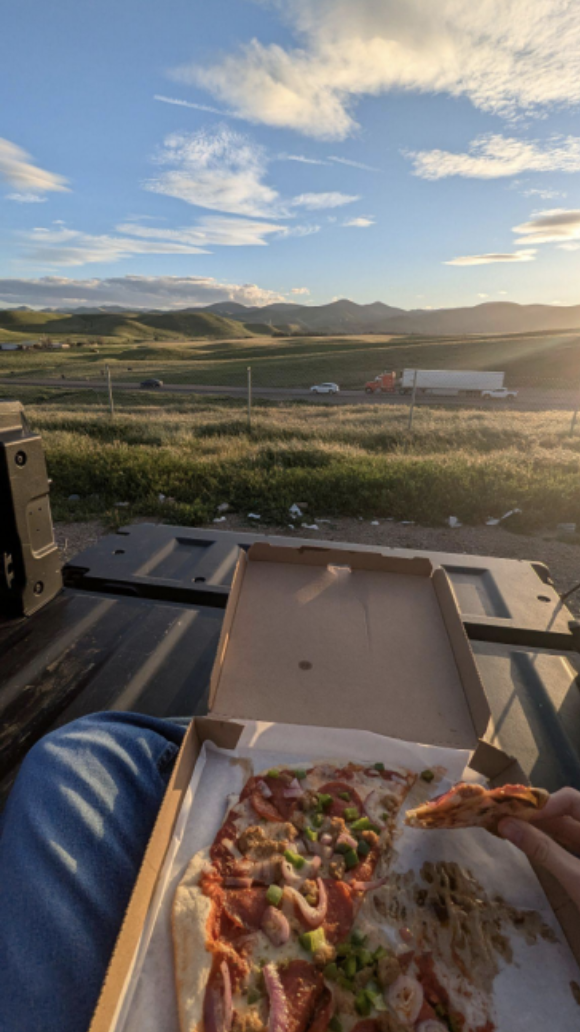
So that’s what I did. I was hungry and I needed space to think. I got a pizza and drove 45 minutes to a vista point overlooking the Diablo Range. Rather poetically, it’s the geographic divide between the valley and the central coast. I sat there, ate, and thought. I thought about Marie. I thought about the future. It had been eight months since my time at Cal Poly. Even still, the drumbeat strains of the night remained in the rhythm of the new born day.
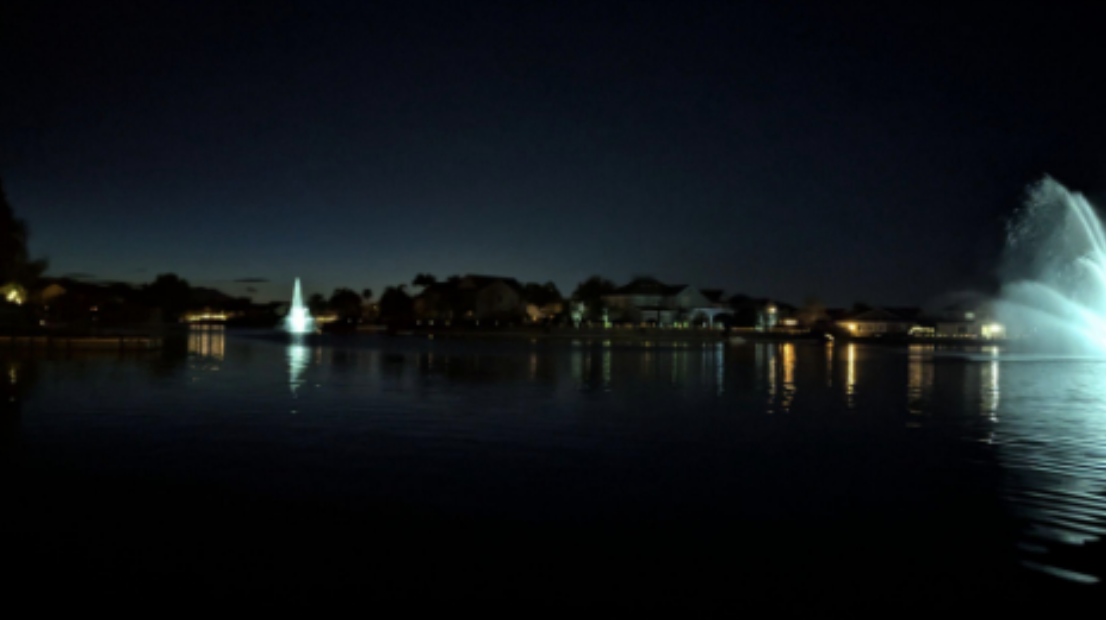
I realized after about an hour and a half on that mountain that pondering my plight could only get me so far. Shockingly, I decided to get coffee. On the drive to the shop, I realized how close I was to my friend Kaleb. I called Kaleb up and we decided to go on an impromptu fishing trip. At this point, my closest friends had all heard the story of “Ohio girl.” My friends had decided my “zenith” was absolutely hilarious. So whenever I bring up Marie, they change their voice into a falsetto and yell: “Make me a woman!” So when I started bemoaning all my failures and tribulations, Kaleb decided to break out old reliable. He shouted “Make me a woman!” in the middle of a lake surrounded by homes.
That willingness to make a joke about it was a big reason why I was able to move on. If every person I talked to offered their most sincere condolences about the situation, I don’t think it would have been as helpful. There’s something about an 18 year old man yelling “Make me a woman!” that makes everything feel a little less serious.
In a similar way, being able to make light of these tough situations helped me get through other dark times. My father passed on September 8th, 2017 - exactly one week after our trip to Muir Woods. The day he passed, my mom made white-people tacos for dinner. To say it was a difficult time would be an understatement of the importance of my father in my life. But that experience taught me how important it is to cherish these things when you have them. My family still quotes that old Italian woman in the focaccia shop from time to time.
For me, food is one of the immutable forces of nature. It shows the feeling that in the face of loss, some things never change. Needless to say, I don’t like matcha. I never liked drinking $7 cups of grass-flavored juice anyway, but the whole experience gives me a funnier explanation as to why. In the hardest times, food can serve as a reminder of those strong emotions. Sometimes all you need is some ketchup, ground beef, and fried flour tortillas to make you feel right at home. Alternatively, a cup of overrated Japanese tea can remind you of your own “Year of the Cat.”
Works Cited
Stewart, Al. “Year of the Cat.” Year of the Cat. 1976. Spotify, https://open.spotify.com/track/7MTX3vevnm41xuEoPxWT3j?si=97cf850888024a7d
Williams, Terry Tempest. “The Cutting Edge of Time: Erosion of Home.” Erosion: Essays of Undoing. Sarah Crichton Books, 2019. Page 4.